
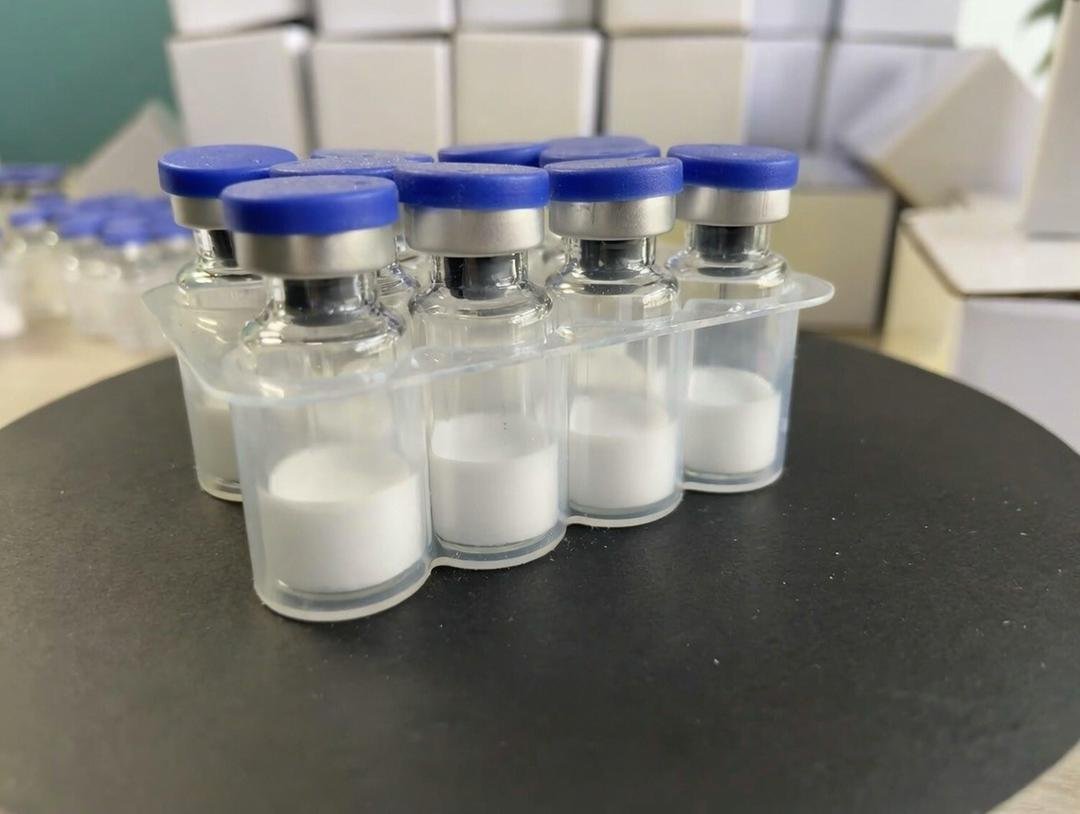

Matrixyl (200mg) – Premium Research Matrikine Peptide
Welcome to Liaocheng Yixin Company, your trusted source for premium matrixyl 200mg for research. As a specialized peptide synthesis manufacturer operating from our facility in Shandong Province, China, we provide high-quality research compounds for the global scientific community.
Matrixyl (INCI: Palmitoyl Pentapeptide-4) is a synthetic signal peptide that has become the benchmark for anti-aging and collagen synthesis research since its launch in 2000 . By mimicking a fragment of pro-collagen type I, this lipidated pentapeptide triggers fibroblasts to produce key extracellular matrix components . Our matrixyl 200mg for research offers investigators a reliable, high-purity compound for dermal biology, wound healing, and tissue engineering studies.
What is Matrixyl?
Matrixyl is the world’s first commercially available cosmetic matrikine—a peptide derived from the extracellular matrix . The core sequence, Lys-Thr-Thr-Lys-Ser (KTTKS), is a naturally occurring fragment of type I procollagen . This sequence is linked to a palmitic acid chain (C16 fatty acid), which enhances lipophilicity and enables penetration through the stratum corneum . The peptide works like a messenger: when collagen is naturally broken down, the KTTKS fragment is released as a signal for fibroblasts to synthesize new collagen .
Key Identifiers:
-
CAS Number: 214047-00-4 (free base)
-
Molecular Formula: C₄₁H₇₉N₇O₁₂
-
Molecular Weight: 862.12 g/mol
-
Sequence: Palmitoyl-Lys-Thr-Thr-Lys-Ser-OH
-
Synonyms: Palmitoyl Pentapeptide-4, Pal-KTTKS, Palmitoyl-KTTKS
-
Purity: ≥99% verified by HPLC
Mechanism of Action in Research
Matrixyl is a scientifically well-characterized research tool with specific mechanisms relevant to dermatological and tissue repair studies:
Signal Peptide / Matrikine Mechanism
Matrixyl functions as a “matrikine”—a peptide that acts as a signaling molecule to regulate cellular activity . When collagen is broken down, the resulting peptide fragments signal to fibroblasts to produce more collagen. Matrixyl mimics this natural process, effectively “tricking” the skin into producing more collagen, elastin, and hyaluronic acid .
Stimulation of Extracellular Matrix Components
Research demonstrates that Matrixyl stimulates the production of:
-
Collagen Types I, III, and IV – providing structural integrity and firmness
-
Elastin – providing elasticity and resilience
-
Fibronectin – supporting cell adhesion and wound healing
-
Hyaluronic acid and glycosaminoglycans – essential for hydration and dermal matrix volume
Fibroblast Activation
The palmitoyl modification increases the peptide’s stability and penetration, allowing it to reach fibroblasts in the dermis . Once in contact with fibroblasts, it activates the TGF-β signaling pathway, initiating a cascade that leads to the regeneration of the extracellular matrix .
Scientific Research Applications
Matrixyl is a well-established research tool with documented efficacy across multiple domains:
Collagen Synthesis & Fibroblast Studies
Matrixyl increases collagen I gene (COL1A1) expression in human dermal fibroblasts by 1.5-fold (50%) . It is widely used as a positive control for studying the regulation of collagen synthesis and extracellular matrix remodeling.
Wound Healing Research
Matrixyl has demonstrated an up to 89% improvement in collagen formation in wound healing models . Studies have also investigated its effect on fibroblast contractility and myofibroblast differentiation, with a focus on understanding the delicate balance between wound healing and scar formation .
Skin Permeation Studies
Research has examined the stability and permeation of KTTKS and its palmitoylated derivative (pal-KTTKS) using hairless mouse skin. Findings indicate that the palmitoylated form has greater stability and is retained in the skin layers, while the unmodified KTTKS is not detected in any layer . This makes it a relevant model for studying peptide delivery and formulation optimization.
Anti-Inflammatory Research
Matrixyl appears to control the secretion of specific cytokines (including interleukin-6) involved in skin aging, suggesting additional anti-inflammatory research applications .
Why Choose Liaocheng Yixin Company?
When sourcing matrixyl 200mg for research, quality and reliability are paramount. Here’s why researchers trust us:
Manufacturer-Direct Quality
We are a legitimate, licensed peptide synthesis company with a physical headquarters in Shandong Province, China. Our facility maintains strict quality control standards and advanced solid-phase synthesis capabilities .
Verified Purity Standards
Every batch undergoes rigorous testing using HPLC and mass spectrometry. Certificates of Analysis are available upon request. Standard purity exceeds 95-99% by HPLC and MS .
Research-Grade Specifications
-
Purity: ≥99% verified by HPLC
-
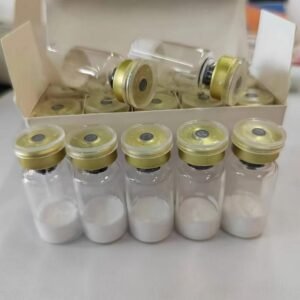
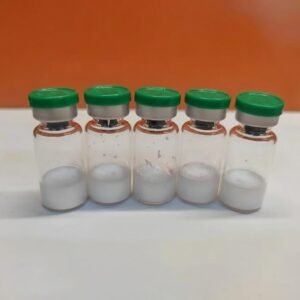
Appearance: White lyophilized powder
-
Solubility: Soluble in DMSO and ethanol
-
Storage: Store powder at -20°C in a sealed container, protected from light and moisture
Quality Assurance & Testing
Every batch undergoes comprehensive quality control:
-
Synthesis by experienced chemists using solid-phase peptide synthesis (SPPS)
-
Purification via preparative HPLC
-
Analysis using HPLC for purity verification
-
Mass Spectrometry for molecular weight confirmation
-
Packaged in sterile conditions for research use
When you need premium matrixyl 200mg for research for your dermatological, tissue engineering, or collagen synthesis studies, choose a manufacturer that prioritizes quality, transparency, and reliability. Liaocheng Yixin Company combines expert peptide synthesis capabilities with rigorous quality control to deliver research materials you can trust.
Be the first to review “Matrixyl (200mg)”
Related products
Custom Peptides
Custom Peptides
Reviews
There are no reviews yet.