
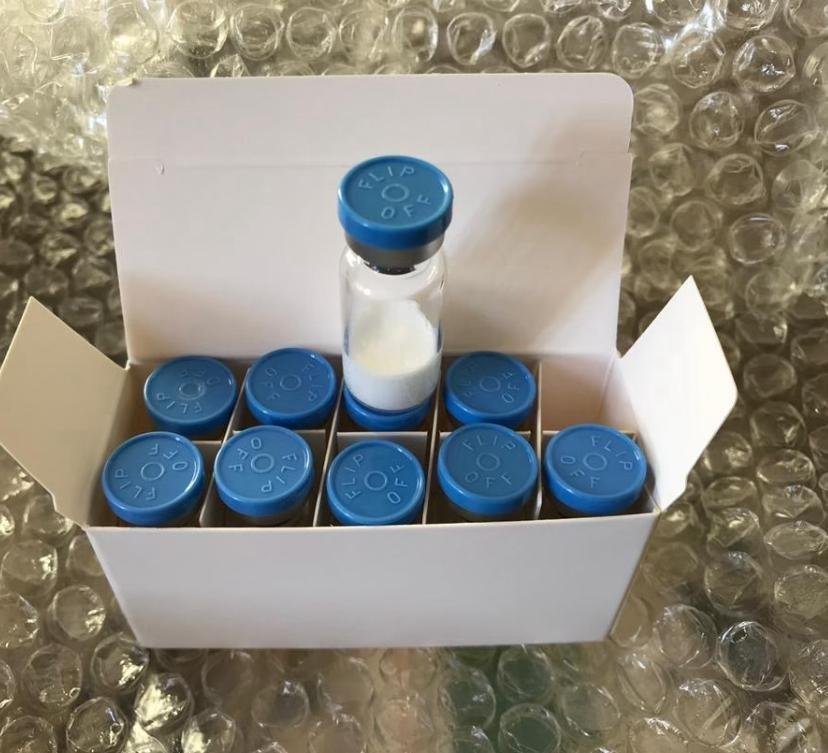


PEG-MGF (5mg) – Premium Research Peptide for Regenerative Studies
Welcome to Liaocheng Yixin Company, your trusted source for premium peg-mgf 5mg for research. As a specialized peptide synthesis manufacturer operating from our facility at No. 9 Lushan Road, Dongcheng Street, Liaocheng Economic and Technological Development Zone, Shandong Province, we provide high-quality research compounds for the global scientific community.
PEG-MGF (Pegylated Mechano Growth Factor) is a synthetic peptide derivative designed to enhance the stability and bioavailability of Mechano Growth Factor (MGF), a splice variant of the insulin-like growth factor 1 (IGF-1) gene . The covalent attachment of polyethylene glycol (PEG) chains to the native MGF peptide provides improved resistance to proteolytic degradation and a prolonged half-life in experimental systems . Our peg-mgf 5mg for research offers investigators a reliable, high-purity compound for tissue repair, muscle physiology, and regenerative research.
What is PEG-MGF?
PEG-MGF is a modified form of Mechano Growth Factor, which itself is a splice variant of the IGF-1 gene produced in muscle tissue in response to mechanical stress or injury . Natural MGF is produced locally and does not travel into the bloodstream, while synthetic MGF administered intramuscularly enters circulation . However, native MGF is only stable in the bloodstream for a few minutes, which led to the development of PEG-MGF to address this limitation .
Key identifiers:
-
CAS Number: Variable (108174-48-7, 1015036-03-4, 12020-86-9 reported)
-
Molecular Formula: C121H200N42O39 (peptide component) + PEG
-
Molecular Weight: ~5,000-8,000 Da (total)
-
Sequence: YQPPSTNKNTKSQRRKGSTFEEHK (24 amino acids)
-
Synonyms: Pegylated MGF, PEG IGF-1 Ec
-
Purity: ≥99% verified by HPLC
Mechanism of Action in Research
PEGylation for Enhanced Stability
The PEGylation process attaches polyethylene glycol chains to the MGF peptide, reducing the body’s natural immune response and increasing the compound’s half-life in the blood by reducing clearance in the kidneys . Native MGF has a half-life of approximately 7 minutes, while PEG-MGF demonstrates a significantly extended half-life of several hours .
Tissue Repair and Regeneration
PEG-MGF stimulates myoblast division, allowing muscle fibers to fuse and mature—a process necessary for the growth of adult muscle . Research has demonstrated that PEG-MGF increases the muscle stem cell count, enabling more cells to fuse and become part of adult muscle cells . The distinction between IGF-1 and MGF is that MGF stimulates myoblast division through stimulation of different receptors .
Signaling Pathway Activation
PEG-MGF is employed to dissect the intricate signaling networks regulated by IGF-1 isoforms, including the activation of anabolic pathways such as the Akt/mTOR pathway that govern cell survival, proliferation, and differentiation .
Scientific Research Applications
Muscle Regeneration and Repair Studies
PEG-MGF is widely utilized in experimental models examining skeletal muscle regeneration, hypertrophy, and repair . By providing a sustained presence of bioactive peptide, it facilitates the investigation of satellite cell activation, myoblast proliferation, and differentiation under various physiological and pathophysiological conditions .
Tissue Engineering Research
PEG-MGF is incorporated into biomaterial scaffolds and cell culture systems to evaluate its effects on cellular proliferation, migration, and matrix remodeling . Its prolonged activity profile supports long-term studies on engineered muscle constructs .
Bone and Cartilage Research
Emerging data suggests PEG-MGF properties may extend to bone tissue, potentially providing a means to investigate molecular pathways involved in bone remodeling and regeneration . It has also been hypothesized to support cellular proliferation in chondrocytes and fibroblasts, making it valuable for connective tissue research .
Peptide Stability and Pharmacokinetic Modeling
PEG-MGF serves as an exemplary model system for studying the impact of PEGylation on peptide pharmacokinetics and stability . Researchers leverage it to assess how chemical modifications influence peptide solubility, resistance to enzymatic breakdown, and biodistribution .
Cellular and Molecular Signaling Studies
PEG-MGF is used to map the temporal and spatial dynamics of MGF-specific signaling events, clarifying the unique contributions of this splice variant in cellular adaptation and tissue remodeling processes .
Why Choose Liaocheng Yixin Company?
When sourcing peg-mgf 5mg for research, quality and reliability are paramount. Here’s why researchers trust us:
Manufacturer-Direct Quality
We are a legitimate, licensed peptide synthesis company with a physical headquarters in Shandong Province, China. Our facility maintains strict quality control standards.
Verified Purity Standards
Every batch undergoes rigorous testing using HPLC analysis. Our PEG-MGF meets ≥99% purity standards . Certificates of Analysis are available upon request.
Research-Grade Specifications
-
Purity: ≥99% verified by HPLC
-
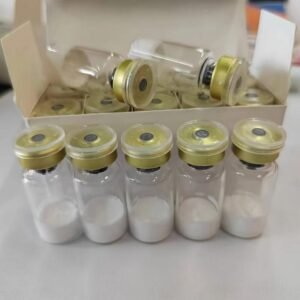
Appearance: White lyophilized powder
-
Storage: Store powder at -20°C in a sealed container, protected from light and moisture
-
Form: Lyophilized powder for research use
- peg-mgf 5mg for research
Quality Assurance & Testing
Every batch undergoes comprehensive quality control:
-
Synthesis by experienced chemists using solid-phase peptide synthesis
-
Purification via preparative HPLC
-
Analysis using HPLC for purity verification
-
Mass Spectrometry for molecular weight confirmation
-
Packaged in sterile conditions for research use
- peg-mgf 5mg for research
When you need premium peg-mgf 5mg for research for your tissue repair, muscle physiology, or regenerative studies, choose a manufacturer that prioritizes quality, transparency, and reliability. Liaocheng Yixin Company combines expert peptide synthesis capabilities with rigorous quality control to deliver research materials you can trust.
Be the first to review “PEG-MGF (5mg)”
Related products
Custom Peptides


Reviews
There are no reviews yet.