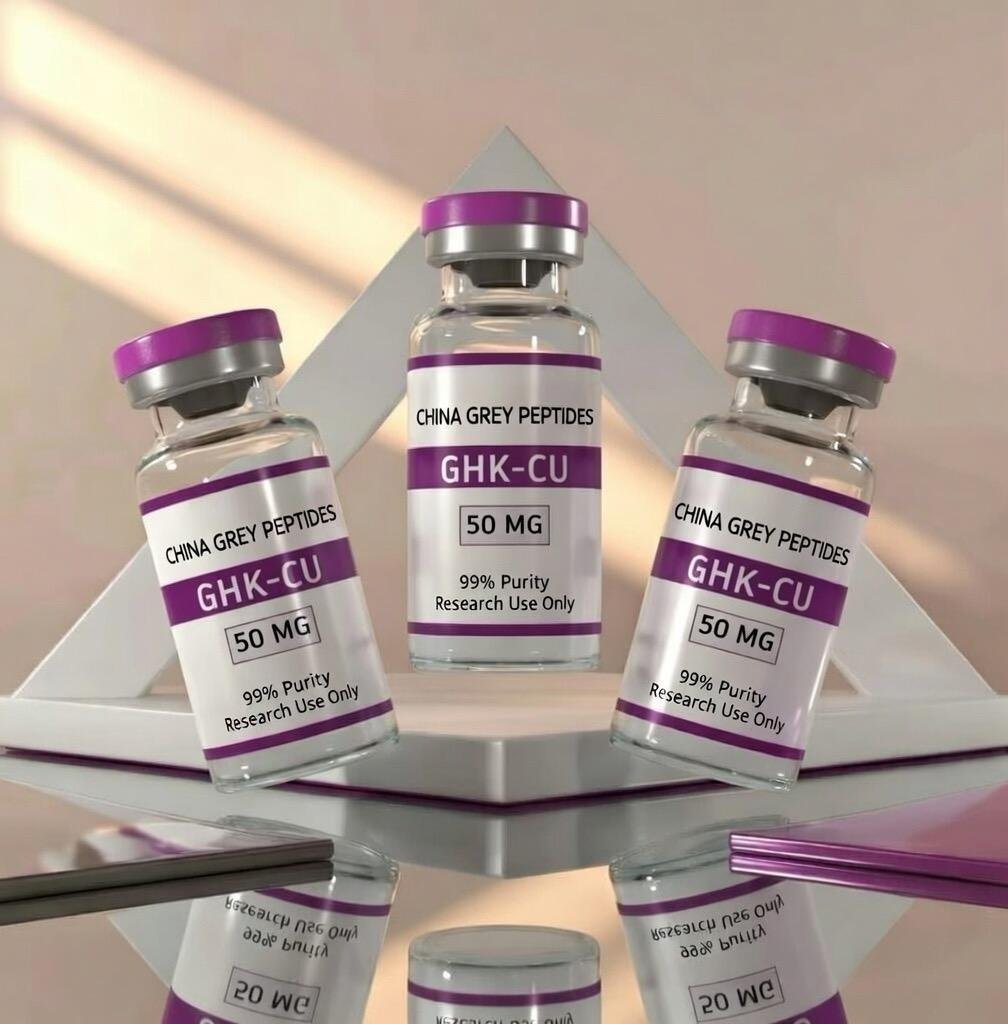
GHK-Cu – Premium Copper Peptide Complex for Research Applications
Welcome to Liaocheng Yixin Company, your trusted source for premium ghk-cu peptide for research. As a specialized peptide synthesis manufacturer operating from our facility at No. 9 Lushan Road, Dongcheng Street, Liaocheng Economic and Technological Development Zone, Shandong Province, we provide high-quality research compounds for the global scientific community. ghk-cu peptide for research
GHK-Cu (glycyl-L-histidyl-L-lysine copper complex) is a naturally occurring tripeptide found in human plasma, saliva, and urine . Its biological significance lies in its regenerative and anti-inflammatory properties, which decline with age as plasma concentrations drop from approximately 200 ng/mL in young adults to much lower levels in older individuals . This age-related decline corresponds with observable decreases in skin elasticity, wound healing capacity, and tissue regeneration . Our ghk-cu peptide for research offers investigators a reliable, high-purity compound for tissue repair, inflammation, and aging-related studies.
What is GHK-Cu?
GHK-Cu is a copper-complexed tripeptide consisting of the amino acid sequence glycyl-histidyl-lysine (GHK) bound to a copper ion . The copper component is essential to its biological activity; the peptide-copper complex works by facilitating copper uptake into cells, which activates a broad range of regenerative and anti-inflammatory processes .
Key identifiers:
-
CAS Number: 89030-95-5
-
Molecular Formula: C14H24N6O4·Cu
-
Molecular Weight: 401.91 g/mol
-
Sequence: Gly-His-Lys (GHK)
-
Synonyms: Copper Tripeptide, GHK-Cu Complex
-
Purity: ≥99% verified by HPLC
- ghk-cu peptide for research
Mechanism of Action in Research
GHK-Cu exerts its effects through multiple well-characterized mechanisms that make it a valuable research tool.
Gene Expression Modulation
GHK-Cu acts as a natural modulator of gene expression in human dermal fibroblasts . Quantitative PCR validation demonstrates significant changes in mRNA expression for genes involved in extracellular matrix synthesis and remodeling :
-
Upregulated genes: COL1A1 (collagen) shows a 1.7-2.4 fold increase, while ELN (elastin) demonstrates a 1.4-1.6 fold increase
-
Downregulated genes: MMP1 (collagenase) decreases by 0.4-0.6 fold, indicating reduced extracellular matrix degradation
-
Modulated genes: TIMP1 (tissue inhibitor of metalloproteinase) is increased, preventing matrix degradation
Collagen Synthesis and Extracellular Matrix Remodeling
GHK-Cu’s most consistently documented mechanism involves stimulating collagen and glycosaminoglycan synthesis in skin fibroblasts . It accelerates wound contraction, improves tissue integration, and increases angiogenesis . The copper component activates lysyl oxidase, the enzyme responsible for cross-linking collagen and elastin, thereby improving the tensile strength of newly formed tissue .
Anti-Inflammatory and Antioxidant Activity
Recent studies have demonstrated GHK-Cu’s significant anti-inflammatory and antioxidant properties . In zebrafish inflammation models, GHK-Cu notably decreased neutrophil and macrophage migration, suppressed expression of pro-inflammatory cytokines (tnf-a, il-1β, il6), and increased the anti-inflammatory cytokine il-10 . Pathway analysis revealed that GHK-Cu administration downregulates the JAK1 pathway . It also mitigates oxidative stress by reducing levels of nitric oxide (NO) and reactive oxygen species (ROS), while improving superoxide dismutase (SOD) activity .
Scientific Research Applications
GHK-Cu has been extensively studied across multiple research domains.
Tissue Repair and Wound Healing Research
GHK-Cu is a cornerstone of wound healing research. A Phase 2 clinical trial (CuHeal, NCT07437586) is currently evaluating a topical GHK-Cu gel for accelerating re-epithelialization of acute skin wounds . Preclinical literature suggests GHK-Cu influences processes relevant to tissue repair such as extracellular matrix remodeling, angiogenesis, and inflammation . Studies in rat models show dose-dependent increases in collagen, DNA, and glycosaminoglycan content at wound sites following GHK-Cu application . Liposome-encapsulated GHK-Cu has demonstrated enhanced cell proliferation (approximately 33% increase) and promoted angiogenesis more effectively than free GHK-Cu, shortening wound closure time to about 14 days post-injury .ghk-cu peptide for research
Inflammation Research
GHK-Cu has demonstrated significant anti-inflammatory effects across multiple models:
-
Zebrafish models: Reduced CuSO4 and LPS-induced acute inflammation through modulation of the JAK1 pathway
-
Soft tissue filler research: GHK-Cu-loaded injectable gels reduced levels of inflammatory factors including NO, TNF-α, IL-1β, and IL-6 while enhancing SOD activity
Skin and Hair Research
GHK-Cu has been widely studied for dermatological applications :
-
Stimulates collagen production and improves skin elasticity and firmness
-
Reduces hyperpigmentation and age-related skin spots
-
Supports hair growth and increases follicle diameter
-
Demonstrates antimicrobial support and reduces infection risk
Cognitive Aging Research
Recent research has explored GHK-Cu’s effects on cognitive aging in aged mouse models . GHK-Cu improved hippocampal-dependent learning in aged mice through distinct biological modes:
-
Intranasal delivery induced coordinated suppression of oxidative phosphorylation and MYC target pathways
-
Short-term intraperitoneal treatment activated DNA repair and stress-response pathways
-
Sex-specific responses were evident, with females showing greater modulation of nutrient-sensing pathways and males exhibiting stronger suppression of oxidative stress-related programs
Why Choose Liaocheng Yixin Company?
When sourcing ghk-cu peptide for research, quality and reliability are paramount. Here’s why researchers trust us:
Manufacturer-Direct Quality
We are a legitimate, licensed peptide synthesis company with a physical headquarters in Shandong Province, China. Our facility maintains strict quality control standards.
Verified Purity Standards
Every batch undergoes rigorous testing using HPLC analysis. Our GHK-Cu meets ≥99% purity standards. Certificates of Analysis are available upon request.
Research-Grade Specifications
-
Purity: ≥99% verified by HPLC
-
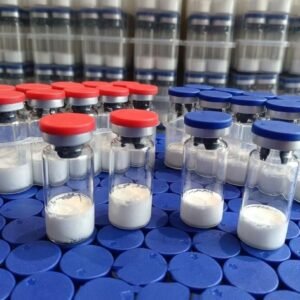
Appearance: Blue to blue-violet lyophilized powder
-
Solubility: Soluble in water and aqueous buffers
-
Storage: Store powder at -20°C in a sealed, desiccated container, protected from light and moisture
-
Form: Lyophilized powder for research use
Quality Assurance & Testing
Every batch undergoes comprehensive quality control:
-
Synthesis by experienced chemists using solid-phase peptide synthesis
-
Purification via preparative HPLC
-
Analysis using HPLC for purity verification
-
Mass Spectrometry for molecular weight confirmation
-
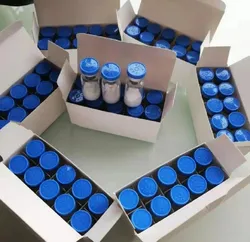
Packaged in sterile conditions for research use
- ghk-cu peptide for research
: What is GHK-Cu and how does it work in research?
A: GHK-Cu is a naturally occurring copper-complexed tripeptide (glycyl-histidyl-lysine) found in human plasma . It works by facilitating copper uptake into cells, activating regenerative and anti-inflammatory processes including collagen synthesis, wound healing, and gene expression modulation .
: Why is the copper component essential to GHK-Cu’s activity?
A: The copper component is essential for GHK-Cu’s biological activity . The peptide’s mechanism involves facilitating copper uptake into cells . Without the copper complex, the peptide does not exert the same regenerative and collagen-stimulating effects .
: What research applications use GHK-Cu?
A: GHK-Cu is used in tissue repair and wound healing research, inflammation studies, dermatological and hair research, cognitive aging studies, and gene expression research .
: What purity level can I expect?
A: All batches are tested to ensure ≥99% purity by HPLC analysis. Certificates of Analysis are available upon request.
: Is this product for human use?
A: No. Our GHK-Cu is manufactured strictly for research use only (RUO). It is not intended for human consumption or clinical applications. ghk-cu peptide for research
When you need premium ghk-cu peptide for research for your tissue repair, inflammation, or aging-related studies, choose a manufacturer that prioritizes quality, transparency, and reliability. Liaocheng Yixin Company combines expert peptide synthesis capabilities with rigorous quality control to deliver research materials you can trust.
| GHK-CU | 50mg, 100mg |
|---|
Be the first to review “GHK-CU”
Related products
Custom Peptides
Reviews
There are no reviews yet.