



MGF (5mg) – Premium Mechano Growth Factor Peptide for Research
Welcome to Liaocheng Yixin Company, your trusted source for premium mgf 5mg peptide for research. As a specialized peptide synthesis manufacturer operating from our facility at No. 9 Lushan Road, Dongcheng Street, Liaocheng Economic and Technological Development Zone, Shandong Province, we provide high-quality research compounds for the global scientific community.
Mechano Growth Factor (MGF) is a splice variant of the Insulin-like Growth Factor-1 (IGF-1) gene that is expressed in muscle tissues in response to mechanical overload or damage . Unlike the systemic IGF-1 produced by the liver, MGF is a local growth factor involved in tissue repair and adaptation . Our mgf 5mg peptide for research offers investigators a reliable, high-purity compound for muscle physiology, tissue regeneration, and cellular signaling studies.
What is MGF?
MGF, also known as IGF-1Ec, is a 24-amino acid peptide derived from the C-terminal E-domain of the mechano growth factor isoform of IGF-1. It is originally called MGF because its RNA form is expressed in muscle tissues in response to overload or damage .
Key identifiers:
-
CAS Number: 80214-83-1
-
Molecular Formula: C121H200N42O39
-
Molecular Weight: 2867.15 Daltons
-
Sequence: YQPPSTNKNTKSQRRKGSTFEEHK-NH2
-
Synonyms: MGF E-domain, IGF-1 Ec, Mechano Growth Factor
-
Purity: ≥99% verified by HPLC
Mechanism of Action in Research
Myoblast Proliferation and Satellite Cell Activation
MGF’s primary research significance lies in its role in muscle physiology. It facilitates the proliferation of satellite cells when muscle is damaged and promotes their development into mononucleated myoblasts . Research demonstrates that MGF stimulates satellite cell activation and promotes myogenic differentiation, providing a model system for understanding muscle plasticity at the cellular and molecular levels .
Distinct Signaling Pathway
Importantly, MGF acts through a pathway distinct from the classical IGF-1 receptor. It activates ERK1/2 phosphorylation but does not activate AKT phosphorylation . This unique signaling profile makes MGF a valuable tool for dissecting muscle regeneration mechanisms and investigating how alternative splicing of growth factors influences cellular responses to mechanical stimuli .
Tissue-Specific Expression
MGF expression increases in satellite cells and in proliferating myoblasts during muscle repair and after mechanical stimulation . Studies demonstrate MGF promotes the in vitro migration of human myoblasts and is expressed in the costochondral growth plate .
Scientific Research Applications
Muscle Regeneration Studies
MGF is frequently employed to examine processes governing skeletal muscle regeneration and hypertrophy. Its ability to stimulate satellite cell activation provides a model system for understanding muscle plasticity .
Cellular Adaptation Models
MGF is expressed following mechanical overload or injury, making it an important agent for modeling cellular adaptation to environmental stressors. Scientists use synthetic MGF to mimic the effects of mechanical strain, investigating cytoskeletal remodeling and cellular proliferation .
Peptide Signaling Research
MGF serves as a valuable tool for investigating peptide-mediated cell signaling, particularly within muscle and neuronal tissues. Researchers utilize MGF in vitro to delineate how growth factor alternative splicing influences cellular responses .
Aging Research
Studies have shown that older muscles are less able to produce MGF, resulting in age-related loss in muscle mass and strength . Treatment with the MGF peptide increased proliferative capacity of human myoblasts from neonatal and young adult muscle .
Important Research Note
Research on MGF has yielded important context for its use. A study from the American Journal of Physiology noted that some commercially available murine C2C12 cells had been grown up so many times that few behaved as muscle progenitor cells . Additionally, studies have shown that myoblasts from older individuals respond to MGF differently than those from young muscle, showing a marked increase in nuclei per myotube rather than proliferation .
Why Choose Liaocheng Yixin Company?
When sourcing mgf 5mg peptide for research, quality and reliability are paramount. Here’s why researchers trust us:
Manufacturer-Direct Quality
We are a legitimate, licensed peptide synthesis company with a physical headquarters in Shandong Province, China. Our facility maintains strict quality control standards.
Verified Purity Standards
Every batch undergoes rigorous testing using HPLC analysis. Our MGF meets ≥99% purity standards. Certificates of Analysis are available upon request.
Research-Grade Specifications
-
Purity: ≥99% verified by HPLC
-
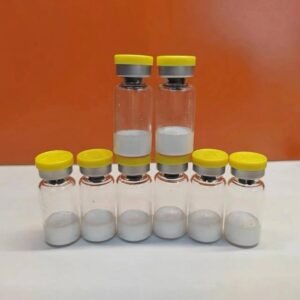
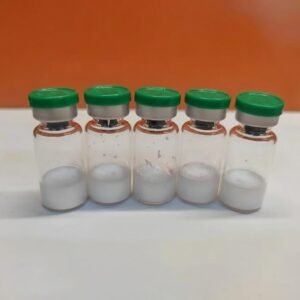
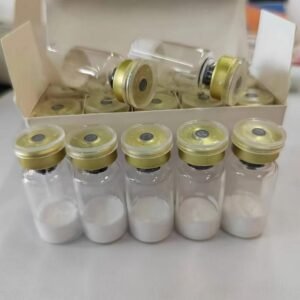
Appearance: White lyophilized powder
-
Storage: Store powder at -20°C in a sealed container, protected from light and moisture
-
Form: Lyophilized powder for research use
Quality Assurance & Testing
Every batch undergoes comprehensive quality control:
-
Synthesis by experienced chemists using solid-phase peptide synthesis
-
Purification via preparative HPLC
-
Analysis using HPLC for purity verification
-
Mass Spectrometry for molecular weight confirmation
-
Packaged in sterile conditions for research use
When you need premium mgf 5mg peptide for research for your muscle physiology, tissue regeneration, or cellular signaling studies, choose a manufacturer that prioritizes quality, transparency, and reliability. Liaocheng Yixin Company combines expert peptide synthesis capabilities with rigorous quality control to deliver research materials you can trust.
Be the first to review “MGF (5mg)”
Related products



Custom Peptides
Custom Peptides
Reviews
There are no reviews yet.