
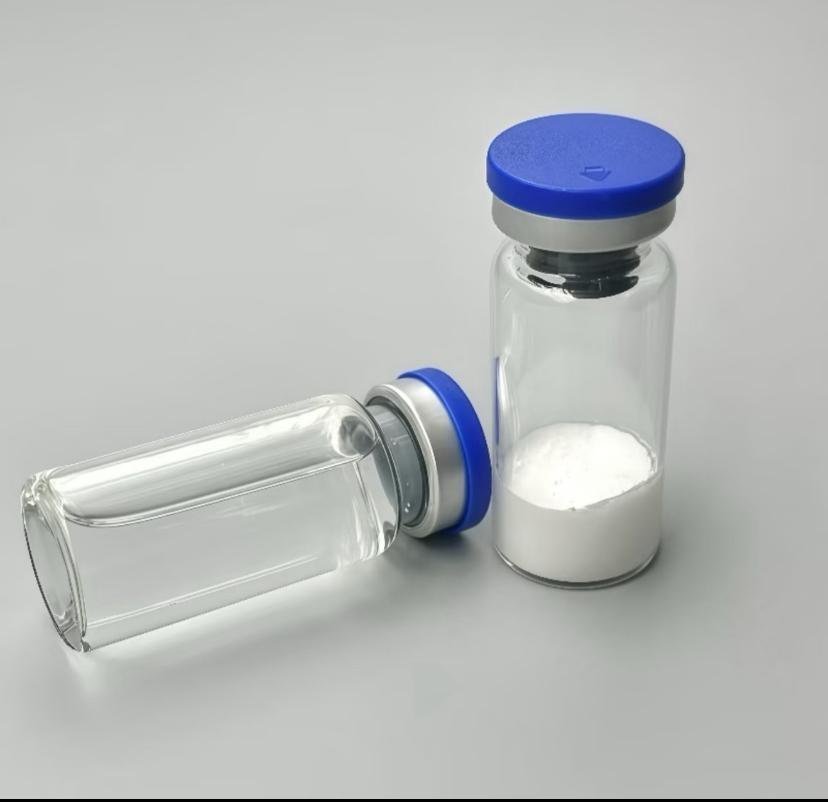
GHRP-6 Acetate – Premium Research Peptide for Growth Hormone & Circadian Studies
Welcome to Liaocheng Yixin Company, your trusted source for premium ghrp-6 acetate for research. As a specialized peptide synthesis manufacturer operating from our facility at No. 9 Lushan Road, Dongcheng Street, Liaocheng Economic and Technological Development Zone, Shandong Province, we provide high-quality research compounds for the global scientific community.
GHRP-6 (Growth Hormone-Releasing Peptide 6) is a synthetic hexapeptide that functions as a potent agonist of the Growth Hormone Secretagogue Receptor type 1a (GHS-R1a), also identified as the ghrelin receptor . First identified in the early 1980s, GHRP-6 emerged as the first of a class of synthetic GH secretagogues with selective and potent actions for GH secretion . Our ghrp-6 acetate for research offers investigators a reliable, high-purity compound for endocrinology, neuroendocrinology, and circadian rhythm research .
What is GHRP-6 Acetate?
GHRP-6 Acetate (also known as Hexapeptide-2, HWAWFK-NH2, SKF 110679, or U 75799E) is a synthetic hexapeptide with the sequence His-D-Trp-Ala-Trp-D-Phe-Lys-NH₂ .
Key identifiers:
-
CAS Number: 145177-42-0
-
Molecular Formula: C₅₂H₆₈N₁₂O₁₂
-
Molecular Weight: 1053.2 g/mol
-
Synonyms: GHRP-6 acetate, Growth hormone releasing peptide 6 acetate, Hexapeptide-2, HWAWFK-NH2, SKF 110679, U 75799E
-
Purity: ≥99% verified by HPLC
Mechanism of Action in Research
GHRP-6 exerts its effects through binding to the growth hormone secretagogue receptor (GHS-R), also known as the ghrelin receptor . This binding activates intracellular signaling pathways involving calcium mobilization and inositol phosphate production .
Key receptor binding data:
-
GHS-R binding inhibition: Ki = 1.9 nM (inhibits binding of the agonist MK-0677)
-
Ghrelin binding: Kd = 260 nM
-
Calcium mobilization: EC50 = 4.5 nM in BHK cells expressing the human receptor
-
Inositol phosphate production: EC50 = 0.83 nM in COS-7 cells expressing the human receptor
Additional mechanism insights:
-
GHRP-6 acts as a negative allosteric modulator of ghrelin signaling
-
It exhibits both central and peripheral actions, stimulating GH secretion through direct pituitary action and central nervous system pathways
-
GHRP-6 activates hypothalamic arcuate neurones, reflected by increased electrical activation and Fos protein expression
Scientific Research Applications
GHRP-6 has been extensively studied across multiple research domains:
Growth Hormone Endocrinology
-
GHRP-6 (0.03 μg/ml) induces release of GH, but not TSH, LH, or FSH, in isolated rat pituitary gland
-
Increases GH levels in rat blood when administered subcutaneously at 50 μg
-
GH release is selective – does not stimulate TSH, LH, FSH, or prolactin
-
Research demonstrates the GH-releasing mechanism differs from that of endogenous growth hormone-releasing factor (GRF)
Circadian Rhythm Research
A landmark study published in the American Journal of Physiology-Endocrinology and Metabolism demonstrated that GHRP-6 administration (100 μg/kg ip) at the beginning of subjective night (CT12) induced a phase delay of free-running rhythms in male mice under constant darkness . Key observations include:
-
GHRP-6 induced higher calcium mobilization and neuronal discharge in the suprachiasmatic nuclei (SCN) compared to other circadian times
-
Decreased levels of glutamate and GABA
-
Increased levels of p-CaMKII, p-CREB, and period 1
-
Delayed circadian expressions of clock genes including CLOCK, Bmal1, and prokineticin 2
The phase-delay effect was abolished by GHS receptor antagonist, CaMKII inhibitor, and anti-phosphorylated CREB antibody .
Appetite and Feeding Research
GHRP-6 increases food intake in rats when administered intracerebroventricularly at 0.3, 1, and 3 nmol . Research demonstrates differential food intake effects in lean versus obese Zucker rat models (1 mg/kg, p<0.01) .
Cardioprotective Research
Studies demonstrate GH-independent left ventricular ejection fraction improvement via CD36 pathways at 100-400 µg/kg in murine models .
Stress-Response and HPA Axis Research
GHRP-6 consistently elevates ACTH and cortisol in swine models, making it valuable for stress-response and hypothalamic-pituitary-adrenal axis research . This distinguishes GHRP-6 from ipamorelin, which fails to elevate ACTH/cortisol even at doses exceeding 200-fold the ED50 for GH release .
Why Choose Liaocheng Yixin Company?
When sourcing ghrp-6 acetate for research, quality and reliability are paramount. Here’s why researchers trust us:
Manufacturer-Direct Quality
We are a legitimate, licensed peptide synthesis company with a physical headquarters in Shandong Province, China. Our facility maintains strict quality control standards.
Verified Purity Standards
Every batch undergoes rigorous testing using HPLC analysis. Certificates of Analysis are available upon request.
Research-Grade Specifications
-
Purity: ≥99% verified by HPLC
-
Appearance: Crystalline solid
-
Solubility: Soluble in DMSO, DMF, and PBS (pH 7.2)
-
Storage: 0-4°C for short term (days to weeks); -20°C for long term (months to years)
Quality Assurance & Testing
Every batch undergoes comprehensive quality control:
-
Synthesis by experienced chemists using solid-phase peptide synthesis (SPPS)
-
Purification via preparative HPLC
-
Analysis using HPLC for purity verification
-
Mass Spectrometry for molecular weight confirmation
-
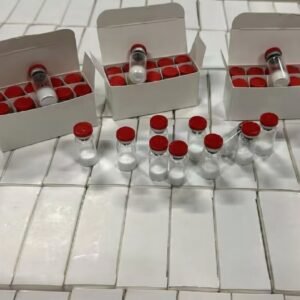
Packaged in sterile conditions for research use
When you need premium ghrp-6 acetate for research for your endocrinology, circadian rhythm, neuroendocrinology, or metabolic studies, choose a manufacturer that prioritizes quality, transparency, and reliability. Liaocheng Yixin Company combines expert peptide synthesis capabilities with rigorous quality control to deliver research materials you can trust.
| GHRP-6 Acetate | 5mg, 10mg |
|---|
Be the first to review “GHRP-6 Acetate”
Related products

Custom Peptides

Reviews
There are no reviews yet.