

P21 (5mg) – Premium Research Peptide for Neurogenesis & Alzheimer’s Studies
Welcome to Liaocheng Yixin Company, your trusted source for premium p21 5mg for research. As a specialized peptide synthesis manufacturer operating from our facility in Shandong Province, China, we provide high-quality research compounds for the global scientific community.
P21 (also designated P021) is a synthetic neurotrophic peptide derived from ciliary neurotrophic factor (CNTF) that is designed to promote neurogenesis, enhance cognitive function, and cross the blood-brain barrier . It was developed to capture the neuro-regenerative properties of CNTF while avoiding its undesirable side effects, making it one of the most promising neurogenic peptides in Alzheimer’s disease and cognitive research . Our p21 5mg for research offers investigators a reliable, high-purity compound for neuroscience, neurodegenerative disease, and cognitive enhancement studies.
What is P21?
P21 is a 21-amino-acid fragment derived from the C-terminal portion of ciliary neurotrophic factor (CNTF), identified through structure-activity relationship studies that isolated its neurotrophic activity . The peptide is engineered with an adamantane-based amino acid residue that enhances lipophilicity and facilitates transport across the blood-brain barrier . It is also known as Peptide 021, P021, or GLXC-21260 .
Key Identifiers:
-
CAS Number: 1246751-68-7
-
Molecular Formula: C27H42N6O8
-
Molecular Weight: ~578.7 g/mol
-
Synonyms: P021, Peptide 021, CNTF-derived peptide, Ac-DGGLAG-NH2
-
Purity: ≥99% verified by HPLC
Mechanism of Action in Research
P21 exerts its neurotrophic effects through multiple mechanisms that make it valuable for neuroscience research:
CNTF Mimetic Activity
P21 is designed to mimic the neurotrophic properties of ciliary neurotrophic factor while possessing improved pharmacokinetic characteristics, including blood-brain barrier permeability . The peptide incorporates an adamantane moiety that blocks carboxypeptidase activity, stabilizing the peptide in vivo, while its lipophilic nature facilitates central nervous system penetration .
Neurogenesis Enhancement
In biochemical and cellular research systems, P21 promotes neurogenesis, particularly in the dentate gyrus region of the hippocampus . Experimental studies examine its effects on neural progenitor cell proliferation, synaptic plasticity, and cognitive function across various model systems.
Blood-Brain Barrier Permeability
The peptide’s ability to cross the blood-brain barrier makes it particularly valuable for central nervous system research applications . This property distinguishes it from many other neurotrophic compounds that face delivery limitations.
Scientific Research Applications
P21 has been extensively studied in peer-reviewed research, with notable publications supporting its relevance:
Alzheimer’s Disease Research
In the 3xTg-AD mouse model of Alzheimer’s disease, chronic oral P21 treatment initiated early prevented neurodegeneration, reduced Aβ and tau pathologies, and rescued episodic memory impairment . Key findings include:
-
Prevention of neurodegeneration with significant reduction in tau hyperphosphorylation at major AD-associated sites
-
Decreased soluble Aβ levels
-
Rescued episodic memory impairment and reduced mortality rate
Hippocampal Neurogenesis & Synaptic Plasticity
Research demonstrates that P21 significantly enhances synaptic plasticity and promotes cognitive function in hippocampal models . Studies show increased expression of synaptic markers synaptophysin and synapsin I in the hippocampal dentate gyrus, supporting the maintenance of healthy neuronal networks .
Developmental & Cognitive Research
Prenatal to early postnatal P21 treatment has been shown to rescue developmental delay in Ts65Dn mouse pups, a model of Down syndrome . Treated animals exhibited normalized developmental milestones and rescued hippocampus-dependent memory impairments in adulthood.
Neurotrophic Signaling Studies
P21 is used as a molecular probe for investigating neurotrophic factor signalling pathways, particularly CNTF signaling, in controlled laboratory systems .
Why Choose Liaocheng Yixin Company?
When sourcing p21 5mg for research, quality and reliability are paramount. Here’s why researchers trust us:
Manufacturer-Direct Quality
We are a legitimate, licensed peptide synthesis company with a physical headquarters in Shandong Province, China. Our facility maintains strict quality control standards and advanced solid-phase synthesis capabilities.
Verified Purity Standards
Every batch undergoes rigorous testing using HPLC analysis. P21 is available with a verified purity of ≥99% by HPLC, with Certificates of Analysis available upon request .
Research-Grade Specifications
-
Purity: ≥99% verified by HPLC
-
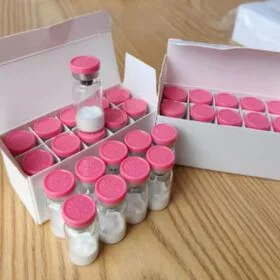
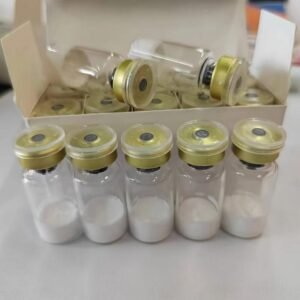
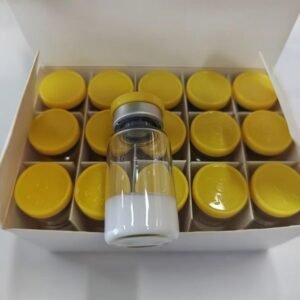
Appearance: White to off-white lyophilized powder
-
Solubility: Soluble in sterile water and buffered aqueous solutions
-
Storage: Store powder at -20°C in a sealed container, protected from light and moisture
Quality Assurance & Testing
Every batch undergoes comprehensive quality control:
-
Synthesis by experienced chemists using solid-phase peptide synthesis
-
Purification via preparative HPLC
-
Analysis using HPLC for purity verification (≥99%)
-
Mass Spectrometry for molecular weight confirmation
-
Packaged in sterile, light-protected conditions for research use
When you need premium p21 5mg for research for your neurodegenerative disease, neurogenesis, or cognitive function studies, choose a manufacturer that prioritizes quality, transparency, and reliability. Liaocheng Yixin Company combines expert peptide synthesis capabilities with rigorous quality control to deliver research materials you can trust.
Be the first to review “P21 (5mg)”
Related products

Custom Peptides



Custom Peptides
Reviews
There are no reviews yet.