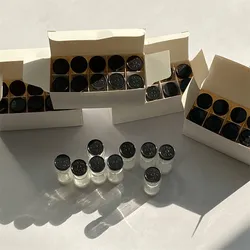
Vesugen (20mg) – Premium Vascular Bioregulator for Research
Welcome to Liaocheng Yixin Company, your trusted source to buy Vesugen 20mg for research. As a licensed peptide synthesis manufacturer operating from our facility in Shandong Province, China, we provide high-quality research compounds for the global scientific community.
Vesugen (also known as KED or T-38) is a synthetic tripeptide bioregulator with the sequence Lys-Glu-Asp (KED). It belongs to the Khavinson family of short peptide bioregulators developed at the St. Petersburg Institute of Bioregulation and Gerontology, designed as a vascular-endothelial tissue-selective gene regulator. Within research models, Vesugen is proposed to support endothelial cell function and influence chromatin-level transcriptional regulation in vascular tissue systems. Our Vesugen 20mg for research offers investigators a reliable, high-purity compound for vascular biology, endothelial cell, and gene expression studies. vesugen 20mg peptide for research
What is Vesugen?
Vesugen is a synthetic tripeptide composed of lysine, glutamic acid, and aspartic acid (Lys-Glu-Asp), abbreviated KED . It belongs to the Khavinson family of short-peptide bioregulators—alongside Epitalon (AEDG, pineal), Pinealon (EDR, neural), and Vilon (KE, thymus)—with Vesugen designated as the vascular-endothelium-targeted member of the group . The peptide carries the internal designation T-38 within the Khavinson research program .
Key Identifiers:
-
CAS Number: Not specified
-
Molecular Formula: C15H26N4O8
-
Molecular Weight: 390.39 g/mol
-
Sequence: Lys-Glu-Asp (KED)
-
Synonyms: Vesugen; KED; Lys-Glu-Asp; T-38; vascular peptide bioregulator
-
Purity: ≥ 99% verified by HPLC
- vesugen 20mg peptide for research
Mechanism of Action in Research
Proposed Tissue-Selective Bioregulation
Within the Khavinson framework, Vesugen is proposed as a vascular-endothelial gene regulator that may influence endothelial cell proliferation and vascular-tissue gene expression programmes . Research indicates that Vesugen may modulate expression of SIRT1 (a NAD-dependent deacetylase implicated in vascular aging) and Ki-67 (a proliferation marker), with reported normalisation toward younger phenotypes in aged-rat vascular tissue .
Chromatin-Level Gene Regulation
The Khavinson hypothesis posits that short peptides like Vesugen can cross the cell membrane, reach the nucleus, and modulate transcription in a tissue-selective way. For Vesugen, the proposed targets are endothelial cells of the vessel wall . Cell-culture experiments report that Vesugen exposure influences the expression of selected genes in vascular endothelial cells, including markers of nitric oxide synthesis and antioxidant defense . Biophysical work has proposed that short peptides like KED can bind directly to DNA in promoter regions and modulate transcription of selected target genes . vesugen 20mg peptide for research
Vascular and Endothelial Research Applications
Vesugen is studied in vitro as a vascular/endothelium-directed short-peptide probe. In organotypic and dissociated cell cultures, it has been reported to stimulate the proliferation marker Ki-67 (which declines with age) and to reduce apoptosis (decreased p53), used experimentally to study endothelial cell renewal and vascular-tissue gene-expression programmes .vesugen 20mg peptide for research
Scientific Research Applications
Vascular and Endothelial Cell Research
Vesugen is used to investigate endothelial cell proliferation, apoptosis-marker studies, and vascular-tissue gene-expression programmes . Studies have examined Vesugen in the context of vascular biology, including preclinical models focused on endothelial cells, microcirculation, and vascular tissue responses . Proposed SIRT1 and Ki-67 modulation makes it relevant for research into vascular aging mechanisms .
Neuroimmunoendocrine Gene Expression Research
Within the Khavinson model, Vesugen is a tool for probing chromatin-level transcriptional regulation in vascular and neuroimmunoendocrine cell systems, including comparative young-versus-old culture studies . Research has examined the peptide in preclinical models of vascular aging and as a reference probe for short-peptide transcriptional regulation .
Preclinical Models of Vascular Aging
Vesugen has been studied in cell culture and rodent models to explore its effects on endothelial function, vascular aging, and tissue regeneration . A 2021 study (PMID 34071923) co-tested KED with Pinealon in a 5xFAD mouse model, reporting that KED at 400 mcg/kg/day prevented dendritic spine loss and trended toward increased neuroplasticity markers .
Important Research Considerations
Evidence Base
Vesugen’s evidence base is primarily from the Khavinson research program, with limited independent Western randomized controlled trial data . Western RCT evidence for Vesugen is minimal, and the peptide is not approved by the FDA, EMA, or any major Western regulator . In Russia, Khavinson bioregulators are registered as supplements rather than pharmaceutical drugs . The human evidence base for Vesugen as a cardiovascular agent is thin and would not meet Western regulatory standards for a clinical claim .
Published Studies
The strongest verifiable PubMed-indexed citation for Vesugen is Khavinson V, Ilina A, Kraskovskaya N, et al., Pharmaceuticals 2021 (PMID 34071923), where KED is co-tested with EDR (Pinealon) in a 5xFAD mouse model of Alzheimer’s disease . A 2015 study in Advances in Gerontology reported geroprophylactic effects of Vesugen and Pinealon in patients with organic brain syndrome, recommending the peptides as geroprotectors for reducing the rate of aging .
Why Choose Liaocheng Yixin Company?
When sourcing vesugen 20mg peptide for research, quality and reliability are paramount. Here’s why researchers trust us:
Manufacturer-Direct Quality
We are a legitimate, licensed peptide synthesis company with a physical headquarters in Shandong Province, China. Our facility maintains strict quality control standards.
Verified Purity Standards
Every batch undergoes rigorous testing using HPLC analysis. Our Vesugen meets ≥ 99% purity standards . Certificates of Analysis are available upon request.
Research-Grade Specifications
-
Purity: ≥ 99% verified by HPLC
-
Molecular Weight: 390.39 g/mol
-
Sequence: Lys-Glu-Asp (KED)
-
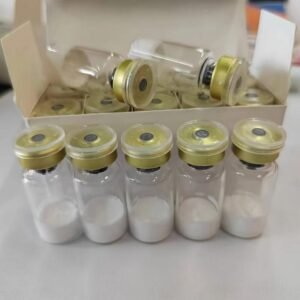
Appearance: White to off-white lyophilized powder
-
Solubility: Soluble in water and buffered aqueous solutions
-
Storage: Store powder at -20°C in a sealed, desiccated container, protected from light. Peptide is hygroscopic
-
Form: Lyophilized powder for research use
Quality Assurance & Testing
Every batch undergoes comprehensive quality control:
-
Synthesis by experienced chemists using solid-phase peptide synthesis
-
Purification via preparative HPLC
-
Analysis using HPLC for purity verification (> 99%)
-
Mass Spectrometry for molecular weight confirmation
-
Packaged under sterile conditions for research use vesugen 20mg peptide for research
When you need premium vesugen 20mg peptide for research for your vascular biology, endothelial cell, or gene expression studies, choose a manufacturer that prioritizes quality, transparency, and reliability. Liaocheng Yixin Company combines expert peptide synthesis capabilities with rigorous quality control to deliver research materials you can trust.vesugen 20mg peptide for research
Be the first to review “Vesugen (20mg)”
Related products
Custom Peptides
Custom Peptides
Custom Peptides
Reviews
There are no reviews yet.